
New sod, laid flush and graded to last
Dead or thin turf comes out first — stripped, raked to the kerb and hauled off — then the ground is graded level before new sod goes down against the walk, ready to take its first cuts once it roots in.
- Best window
- March – May, Sept – Nov
- Establishes in
- 3 – 8 weeks by season
- Estimate
- Free, on site
How a sod job runs
The finished lawn is only as good as what it is standing on, so most of the work happens before the first pallet is cut.
- 1
Strip the old turf
The dead or thin grass is cut out, raked to the kerb and hauled off — not tilled under, where it rots in a layer that holds water against the new roots.
- 2
Grade the ground level
The bare soil is raked flat and set just low enough that the new sod will finish flush with the walk and the drive, so nothing scalps on the first mow.
- 3
Lay it tight and flush
Pieces are laid staggered and pushed tight so the seams knit instead of drying open, and cut clean against every edge.
- 4
Set the watering plan
You leave with a two-week watering schedule for the establishment window — the water district allows daily irrigation for new landscape while it roots in.
One job, start to rooted
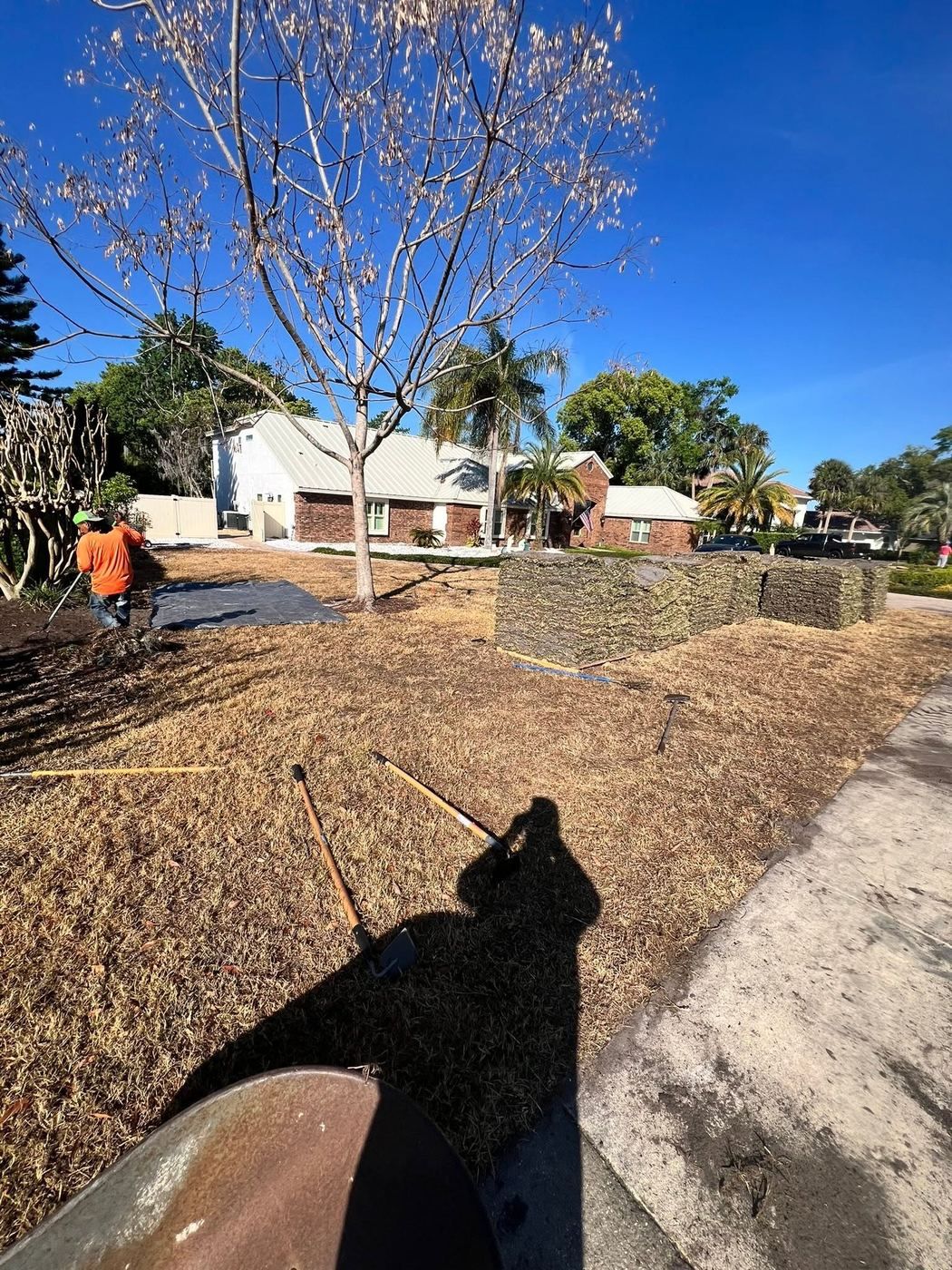
Step 1
Pallets of fresh sod staged on a dormant lawn, before any of the old turf comes out
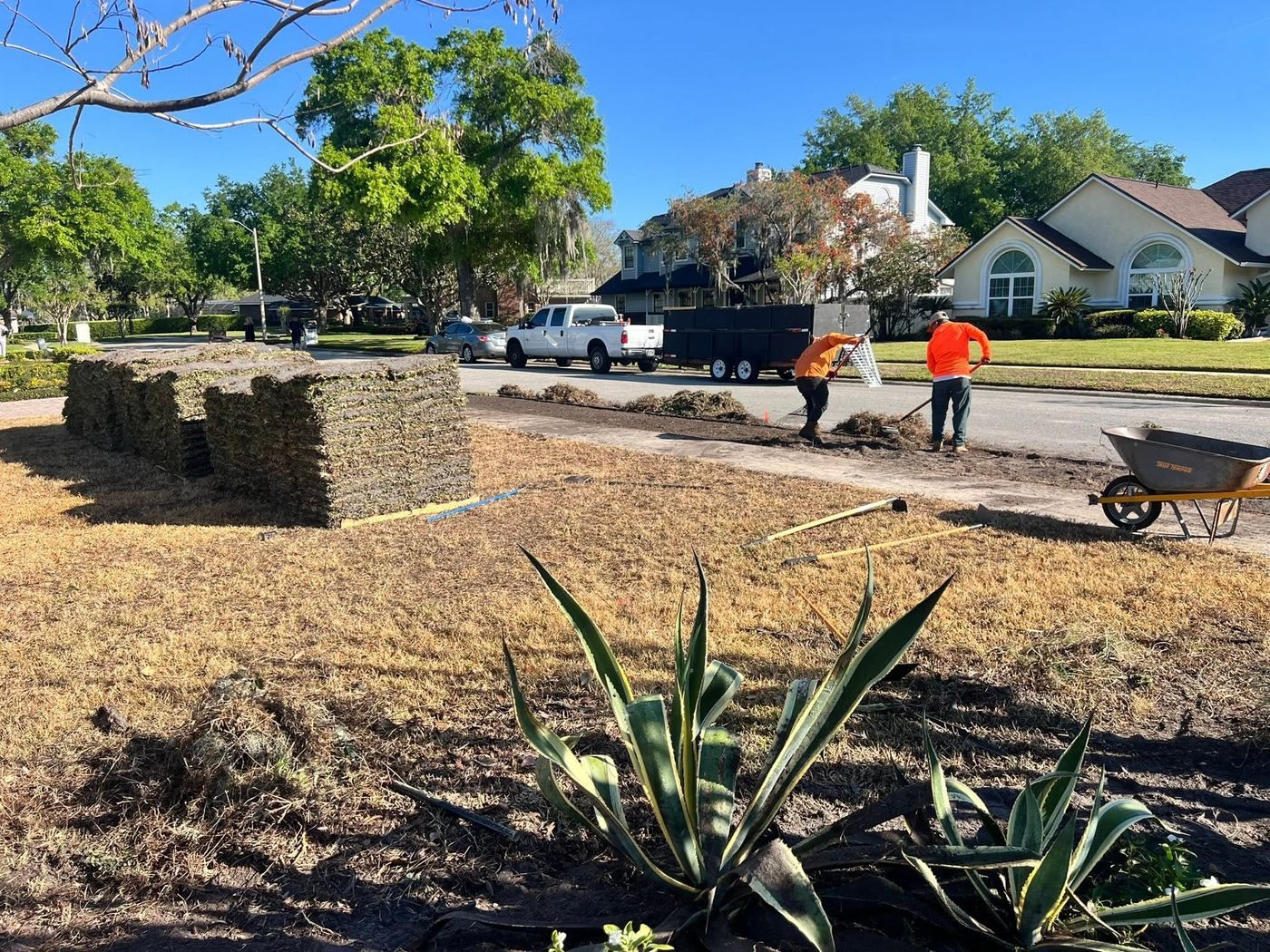
Step 2
The dead turf comes out first — stripped, raked to the kerb and hauled off
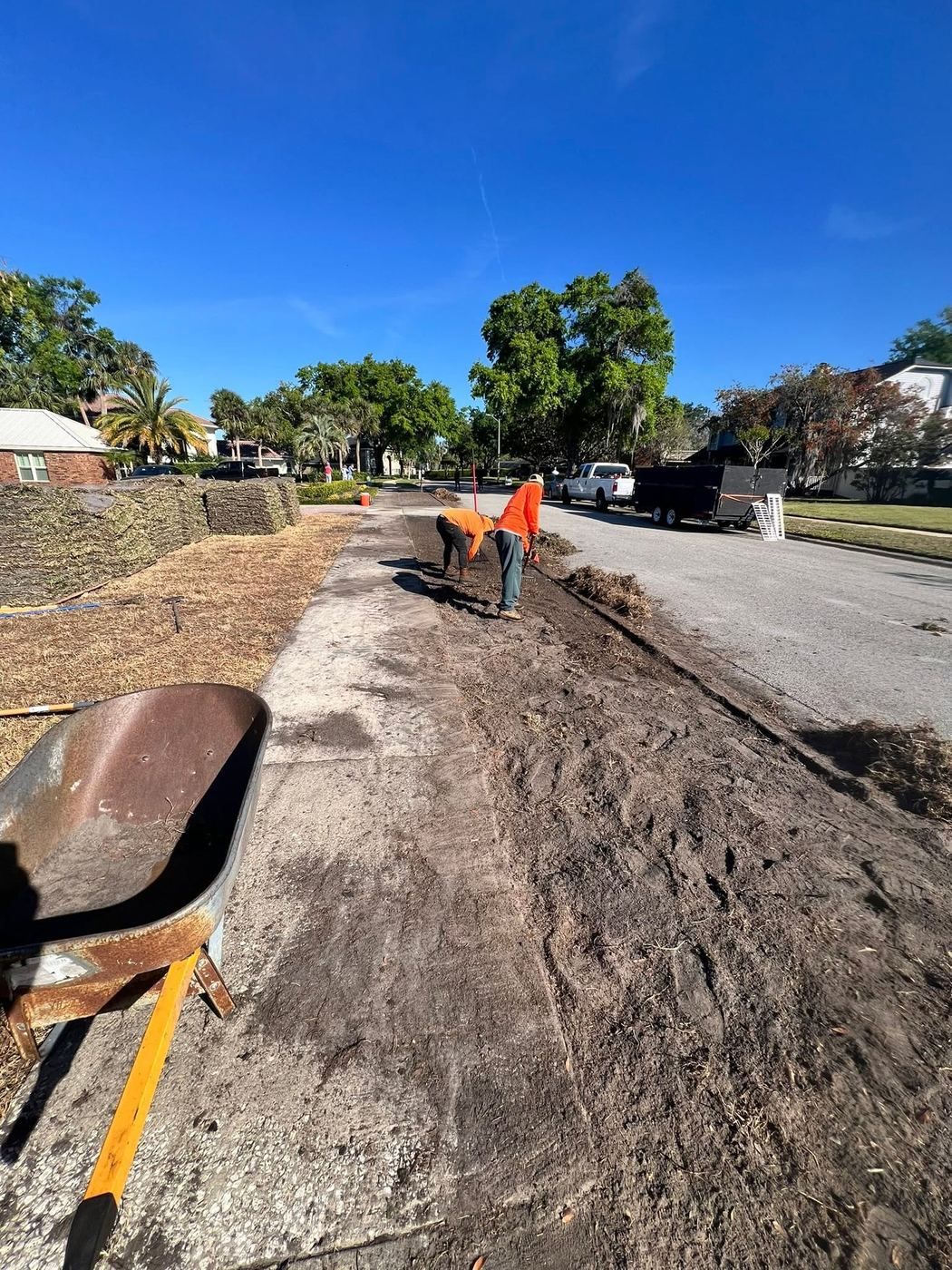
Step 3
Bare soil graded flat along the walk so the new sod lies level with the concrete
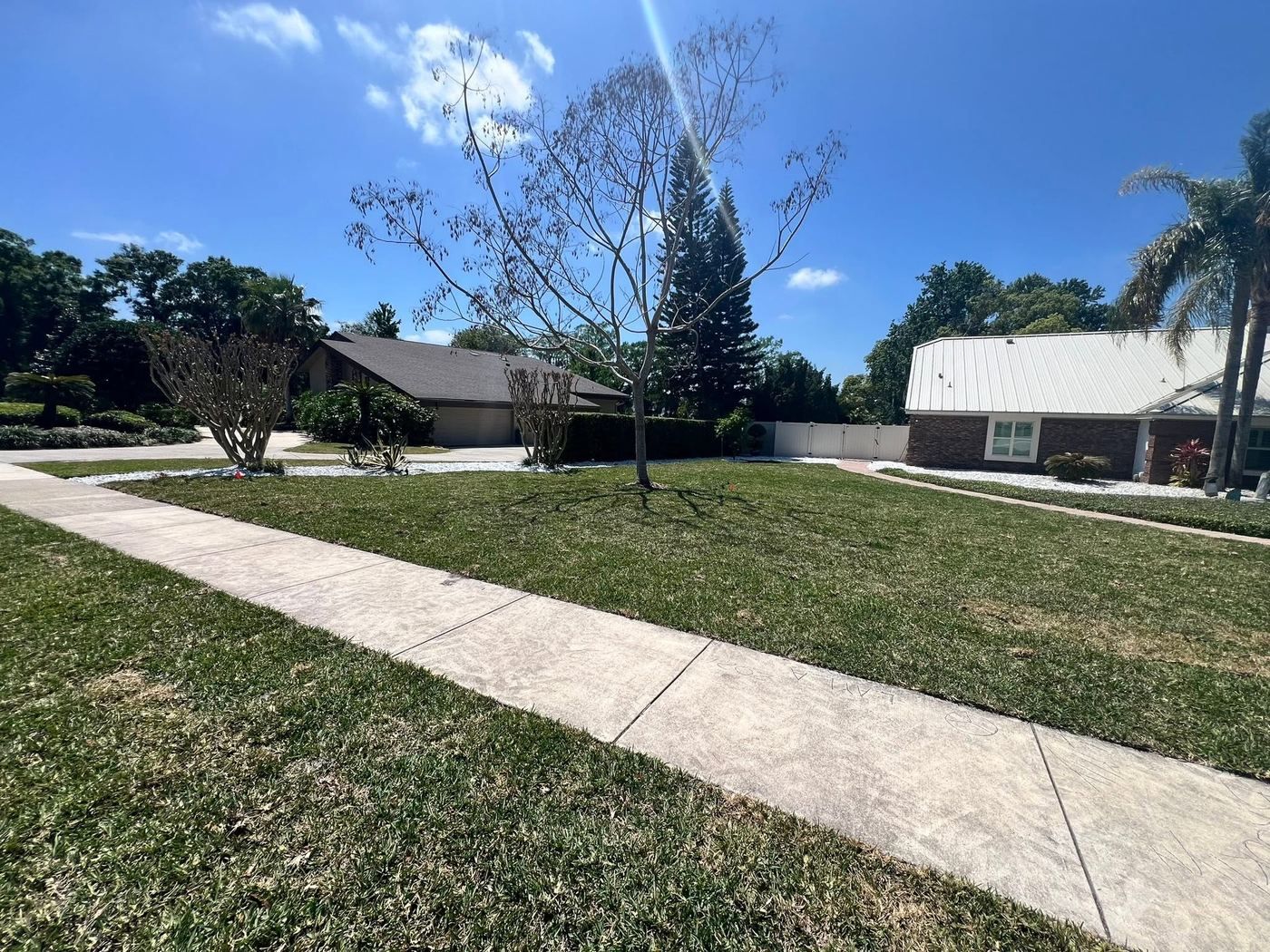
Step 4
The same front lawn once the new sod has rooted in and taken its first cuts
Which grass goes down
Three warm-season grasses cover almost every Central Florida yard. The right one is a question of shade, wear and how much upkeep the lawn will get.
St. Augustine
The usual choice here. Takes the heat, humidity and salt air, tolerates some shade, and roots in faster than zoysia. A broad blade and a soft feel underfoot.
Bahia
The tough, low-input option. Deep-rooted and the most drought-tolerant — it holds without irrigation once established. Coarser underfoot, and it seeds tall stalks between mows.
Zoysia
Finer and denser, with better wear tolerance. Slower to fill in, and it builds thatch that needs managing. The premium look, for a lot that will get the upkeep.
Before you order a pallet
New sod, the questions that come up
When is the best time to lay new sod?
Spring and early fall — roughly March to May, then September to November — when the soil is warm enough for fast rooting but the heat is not cooking the new grass. Sod can go down in any month here; summer just means more watering to carry it through establishment, and winter means a slower root-in.
How should new sod be watered?
Keep the soil under the sod damp, not soggy, for the first two weeks. That usually means watering twice a day for about the first week, then longer but less often in the second week so the roots chase the moisture down. The water district allows irrigation of new landscape at any time of day for the first 30 days and every other day for the next 30 while it establishes; after that the normal schedule applies. Lift a corner at two weeks — if it resists, it has rooted.
Which grass should go down in a Central Florida yard?
St. Augustine is the usual choice — it takes the heat, humidity and salty air, tolerates some shade, and establishes faster here than zoysia. Bahia is the tough, low-input option: deep-rooted, the most drought-tolerant, and it survives without irrigation once established, but it is coarser underfoot. Zoysia is finer and denser with better wear tolerance, but it is slower to fill in and builds thatch. The walk-through settles which one the light and the use on your lot actually call for.
How long before I can walk on new sod or mow it?
Keep foot traffic off it for the first two weeks and light for three to four — walking on it early compacts the soil and slows the roots. The first mow is usually around ten days to two weeks for St. Augustine, once a tugged corner resists instead of lifting. In summer the whole thing establishes in three to five weeks; in winter, closer to five to eight.
Do you remove the old turf first?
Yes. The dead or thin turf is stripped out, raked to the kerb and hauled off, then the ground is graded level before any new sod goes down — so the new grass lies flush with the walk and the drive, not proud of them.
Send the address and we'll measure the lawn.
Tell us what is there now — bare patches, thinned-out turf, or a lawn that never took — and we will walk it, work out the square footage and the grade, and put a real number on the job.
Prepared by Lawncare 4U — Longwood, FL